Why Did We Need a Rulebook, Anyway?
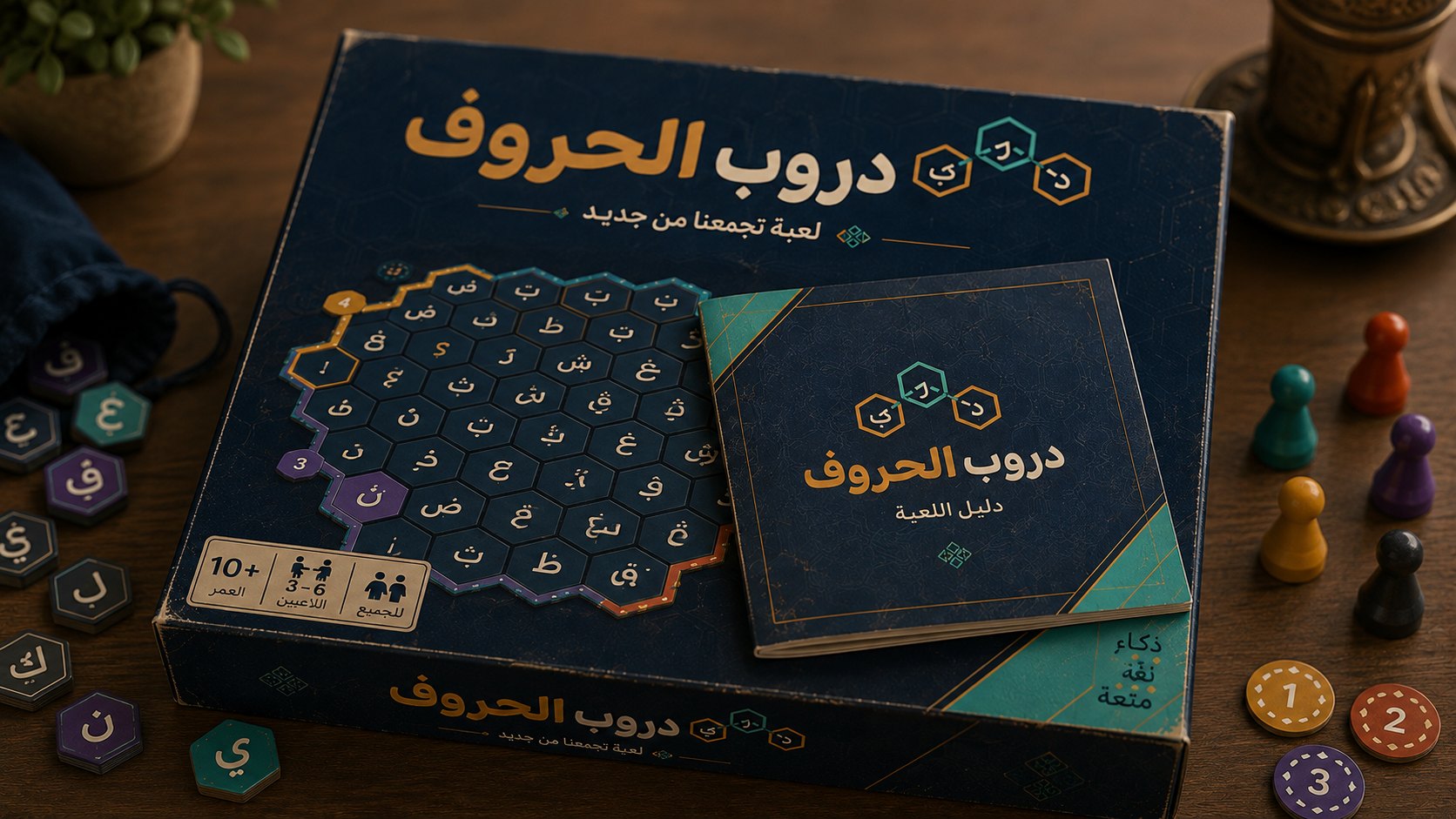
Wouldn't it be easier to make a simple game that needs no explaining?
A reasonable question… and I used to think the answer was: yes.
Then we started playing.
Have you ever heard of three-player chess?
If you haven't, that's fine… even regular chess has managed to ruin people's moods for centuries without needing a third player.
But add just one more player, and the rules that seemed self-evident begin to question themselves.
Who attacks whom?
When does a turn end?
How do you stop two players from ganging up on the third?
And most importantly: how do you prove you were the victim of a premeditated family conspiracy?
We didn't build three-player chess, but it made me understand why it never became the official game of every household… yet.
Because adding a single player… changes everything.
And we, of course, didn't stop at three.
From day one, we wanted a game that three, four, five, or even six players could play at the same time.
The hexagon kept tempting us with the idea.
Six sides — therefore, six players.
Very simple logic… on paper.
But paper doesn't object.
It doesn't quit in the middle of a round.
And it doesn't tell you, twenty minutes in: "I knew from the start that rule was unfair."
Family, on the other hand… does all of that.
I thought the job was easy: build a board, add questions, let people enjoy themselves.
Then I discovered that people have very different definitions of enjoyment.
One wants a fast turn.
Another wants enough time to think.
And a third wants to win — and believes this is a design feature the game ought to accommodate.
With every round I was forced— I mean, got to play with my family, we would discover a new problem.
Once, the turns ran too long.
Once, luck grew stronger than knowledge.
And once, someone discovered a way to win that had never crossed our minds — then insisted it wasn't a loophole, but strategic genius.
And every time, we went back to the board.
Change a rule.
Delete another.
Add a card.
Then start over — because the best way to confirm you've solved a problem is to discover two new ones.
Some of the rules in the game today weren't written because we love complexity.
They were the only solution to a problem that surfaced after a round of shouting, disagreeing, objecting, and accusing the referee of bias.
We were chasing a strange kind of balance.
For the game to stay burning until the very end.
For nobody to fall asleep in the middle of it.
For no player to feel it's easier than it should be.
And for no one else to complain it's so hard it requires a degree in hexagonal engineering.
That's why, when you read the game's rulebook, you're not just reading a set of laws.
You're reading the distillation of round after round of negotiations, shouting, sarcasm, and pleading — then coming back to the table as if nothing had happened.
These rules did not come out of a calm meeting.
They came out of a family that wanted to keep playing without someone flipping the table — or breaking the screen with the TV remote.
So if you ever discover a rule that could be better…
…then perhaps you will be the ones to write the next edition of this rulebook.